-
No products in the cart.



Do THC Gummies Show Up on a Drug Test? Straight Answer
Do THC gummies show up on a drug test? Learn what urine screening targets, the cutoff levels that decide your result, and where the real risk actually sits.
TLDR: CBD and THC interact with different receptors in your body’s endocannabinoid system. Many users reach for CBD for everyday use without psychoactive effects. Others report that a 3:1 CBD:THC ratio topical gives them something extra. The format matters as much as the compound, roll-ons and balms stay localized, gummies work body-wide. Canna Mood by Your Effects covers all three formats with COA-tested, USA-grown hemp.
When you’re comparing CBD vs THC for pain, the answer depends on two things: the compound you want and the format that fits your situation. This article breaks both comparisons down so you walk away with a clear answer, not another list of maybes.
I reviewed four peer-reviewed studies from the National Institutes of Health on cannabinoids and the endocannabinoid system, and one finding stood out immediately: researchers studying over 1,000 patients found that cannabinoids administered together produced better outcomes than a single compound alone. A pilot study of 20 former professional athletes using topical CBD twice daily for six weeks recorded a mean pain score drop from 3.5 to 1.7, a result the authors flagged as statistically significant (P <, 0.001). These are early numbers from small studies, and larger trials are still needed. Still, the direction of the research gives a useful framework for thinking about your options.
Your body runs an endocannabinoid system (ECS) whether you use cannabis products or not. It regulates a wide range of functions including mood, appetite, and how your nervous system processes signals. The ECS relies on two main receptor types: CB1 receptors, concentrated in the central nervous system, and CB2 receptors, found mainly in peripheral tissues throughout your body.
THC binds preferentially to CB1 receptors. That binding is what produces the psychoactive effect THC is known for. CBD works differently, it acts as a CB1 receptor inverse agonist, meaning it does not produce psychoactive effects and researchers believe it moderates some of THC’s cognitive impact when the two are used together. CB2 receptor activation, where CBD shows activity, is associated with responses in peripheral tissue without central nervous system involvement, according to this PMC review on cannabinoids and pain from the National Library of Medicine.
Neither compound is a drug. These are hemp-derived phytocannabinoids. And neither compound is approved to treat, cure, or diagnose any condition. What researchers are studying is how these compounds interact with the ECS, and the early data continues to generate interest.
CBD users commonly report a calm, grounded feeling without any high. Many people apply CBD topicals to sore muscles after workouts, or take CBD gummies in the evening as part of a wind-down routine. Because CBD produces no psychoactive effect, it fits easily into a daily schedule at any time of day.
THC, when present in a product, adds a psychoactive layer. In topical form, meaning applied directly to skin, THC does not absorb into the bloodstream at the levels needed to produce a body-wide effect. That’s what makes topical THC interesting to researchers studying localized applications. Many users who try a 3:1 CBD:THC balm report that it feels different from CBD-only topicals, though individual responses vary widely.
From everything I’ve read across the research, the 3:1 CBD:THC ratio in a topical format strikes me as one of the more thoughtful product formulations on the market right now. You get the non-psychoactive profile of a CBD-dominant product with the peripheral receptor engagement that THC-inclusive formulas are being studied for. For anyone curious about the entourage effect but not interested in a psychoactive experience, a ratio topical is a smart entry point.
The entourage effect is the idea that cannabinoids work better together than in isolation. The NIH-indexed research on cannabinoids and pain states plainly that “cannabinoids administered together are more effective at ameliorating neuropathic pain than the use of a single agent” in preclinical studies. Researchers aren’t drawing clinical conclusions yet, but the hypothesis drives a lot of the current product development you see in the hemp space.
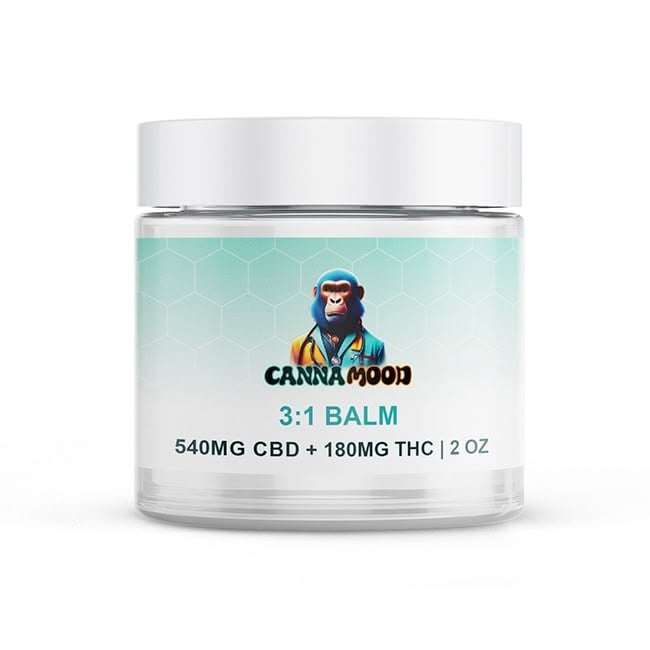
A 3:1 CBD:THC ratio keeps CBD dominant while including enough THC to potentially engage both receptor types. Canna Mood’s 2 Oz Topical Balm uses exactly that ratio, 540mg CBD and 180mg THC, in a single topical product. You apply it directly where you want it. No systemic absorption. No psychoactive effect from topical use.
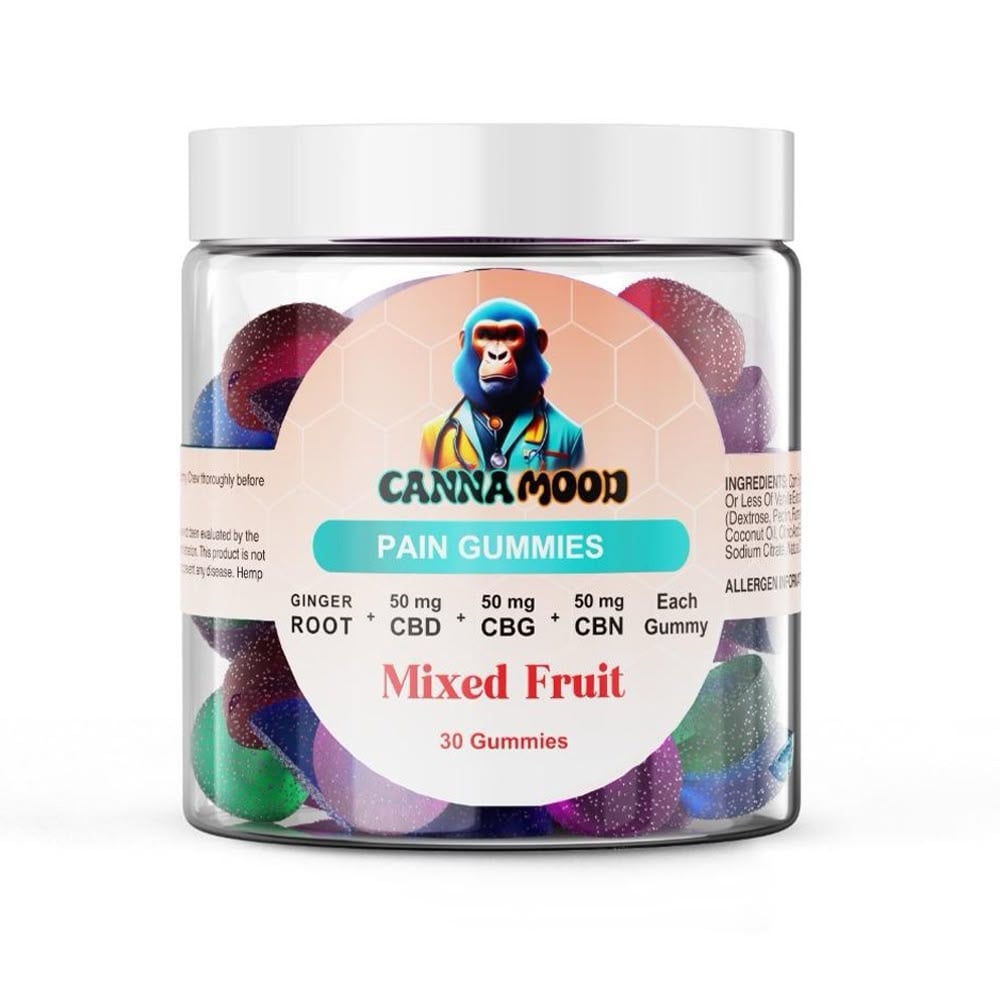
Beyond CBD and THC, many formulas now include minor cannabinoids like CBG and CBN. CBG (cannabigerol) is sometimes called the “mother cannabinoid” because it is a biosynthetic precursor to CBD and THC. Researchers are studying its interaction with the ECS separately from CBD. CBN (cannabinol) is associated in user surveys with relaxation and sleep. Stacking these compounds into a single product, like the Canna Mood gummies below, is the direction the market is moving.
The compound debate is only half the equation. Format determines where and how your body responds to whatever you take. A roll-on and a gummy can contain identical cannabinoid mg counts and deliver completely different experiences, because they follow different pathways.
Topicals, roll-ons, balms, creams, stay local. You apply them to a specific area. The cannabinoids absorb through skin layers and interact with receptors in the surrounding tissue without reaching the bloodstream in significant quantities. Onset is typically 15 to 45 minutes. Duration runs 2 to 4 hours for most users. If your focus is a specific knee, shoulder, or lower back area, topical is the logical starting point.
Gummies and other ingestibles travel through your digestive system. They take longer to kick in, typically 45 minutes to 2 hours, but the effect distributes system-wide rather than staying in one spot. Duration for an edible often runs 4 to 8 hours. If you want a full-body approach or prefer something you take once and don’t think about for hours, an edible format fits better.
A peer-reviewed pilot study published in PMC (2023) observed that former elite athletes using topical CBD twice daily for six weeks saw mean pain scores fall from 3.5 to 1.7 (P <, 0.001) with no serious adverse effects. The study authors noted that topical administration was well-tolerated. This is one small study, not a clinical endorsement, but it illustrates why topical CBD is drawing researcher attention.
| Format | How Applied | Onset Time | Duration | Best For | Canna Mood Example |
|---|---|---|---|---|---|
| Roll-On | Rolled directly onto skin | 15 to 45 min | 2 to 4 hours | Targeted, on-the-go application | Joint &, Muscle Therapy CBD Roll-On 2000mg |
| Balm / Tin | Massaged into skin with fingers | 15 to 45 min | 2 to 4 hours | Localized use with massage technique | 3:1 Topical Balm CBD &, THC 540mg+180mg |
| Gummies | Eaten and digested | 45 min to 2 hours | 4 to 8 hours | Full-body, extended support | 30-Pack Pain Relief Gummies CBD+CBG+CBN |
Both roll-ons and balms are topical. The difference is practical. A roll-on lets you apply without getting your hands involved, cap off, roll directly on your knee or shoulder, cap back on. It travels well in a gym bag. The ball applicator also creates light pressure as you roll, which some users find adds to the experience.
A balm tin requires you to scoop or press product out and massage it in. That hands-on application gives you more control over coverage area and lets you work the product in more deliberately. Some users also prefer a balm when they want a combination formula, like a 3:1 CBD:THC ratio, that they apply with intention rather than quickly rolling on.
If I were building a starting kit for someone who wanted to explore all three formats without overcomplicating it, I’d start with the 2000mg roll-on for targeted use, add the 3:1 balm for a second topical with a ratio twist, and bring in the gummies for the systemic layer. That’s not a prescription, it’s a logical way to cover the full range of what these formats do differently, and to get a real sense of which one fits your routine.
Canna Mood covers every format in this comparison with COA-tested, USA-grown hemp. All three products below ship nationwide. Your Effects is a Las Vegas vitamin-enhanced CBD and THC brand with the tagline “Nature’s Recipe For a Brighter Mood.” Every formula is built to stack cannabinoids intelligently rather than isolate a single compound.
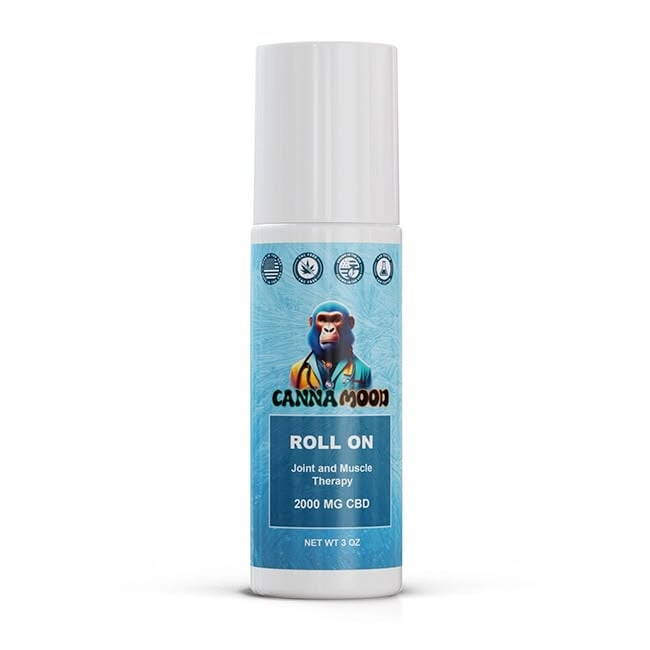
The Joint and Muscle Therapy CBD Roll-On 2000mg is the highest-strength roll-on in the lineup. 2000mg of CBD in a convenient applicator. Many users apply it directly to sore muscles and joints after physical activity, before a workout, or at any point in the day. It’s the fastest application in the Canna Mood topical range.
The 2 Oz 3:1 Topical Balm, CBD &, THC (540mg CBD + 180mg THC) is the entourage-style option. The 3:1 ratio keeps CBD dominant. The THC adds CB1 receptor engagement at the peripheral level without a systemic psychoactive effect from topical use. Massage it in wherever you want localized attention. This is the product to reach for if you’re curious what a ratio topical does differently from CBD-only.
The 30-Pack Pain Relief Gummies, Ginger Root + CBD + CBG + CBN is the full-body edible option. The formula stacks CBD with CBG and CBN alongside ginger root, which has its own long history of use in wellness contexts. Each pack gives you 30 servings. For a deeper look at CBD for pain relief and what the research says, the Your Effects resource section has more.
Questions about any product? Call 725.261.5609 or email info@youreffects.com. Your Effects ships nationwide and the team answers directly.
The research on CBD and THC for the endocannabinoid system is growing every year. Formats matter. Ratios matter. And you deserve a product that reflects all of that, not only a generic isolate in a generic package. Shop vitamin-enhanced CBD products from Canna Mood today and use the comparison table above to pick your starting point. Stock is limited on the 3:1 Topical Balm, it moves fast. Don’t wait until it’s gone to find out what a ratio topical does for your routine.
Topical THC applied to skin does not absorb into the bloodstream at levels needed to produce a psychoactive effect. The cannabinoids in a topical balm interact with receptors in the surrounding skin and tissue without systemic absorption. This is why many users who want THC’s peripheral receptor engagement choose a topical format over an edible when they do not want any psychoactive experience.
CBD (cannabidiol) and CBG (cannabigerol) are both non-psychoactive hemp-derived cannabinoids, but they interact with the endocannabinoid system through different pathways. CBG is a biosynthetic precursor to CBD and THC in the hemp plant. Researchers are studying CBG separately from CBD for its own interactions with CB1 and CB2 receptors. Stacking both in one formula, as the Canna Mood pain relief gummies do, reflects the entourage effect principle that cannabinoids work better together.
A roll-on or topical balm typically produces a localized response within 15 to 45 minutes of application. Gummies travel through the digestive system, so onset runs 45 minutes to 2 hours depending on metabolism, stomach contents, and individual response. The trade-off: gummies generally last 4 to 8 hours compared to 2 to 4 hours for a topical. Many users use both in one routine for different reasons.
Hemp-derived products with THC at or below 0.3% by dry weight are federally legal under the 2018 Farm Bill. Products with higher THC concentrations follow state law, which varies. Always check your local regulations before purchasing any THC-containing product. The Canna Mood 3:1 Topical Balm is hemp-derived. Visit the Your Effects FAQ page for product-specific compliance details.
COA stands for Certificate of Analysis, a third-party lab report confirming what is in the product. A COA verifies cannabinoid content (CBD, THC, CBG, CBN levels), confirms the absence of pesticides and heavy metals, and validates that the product matches its label. Any hemp brand worth buying should make COA documents available. Canna Mood products are COA-tested, and you can request documentation through Your Effects directly.
These statements have not been evaluated by the Food and Drug Administration. These products are not intended to diagnose, treat, cure, or prevent any disease. Hemp-derived products are for adults 21 and older. Check your local laws before purchasing.

Do THC gummies show up on a drug test? Learn what urine screening targets, the cutoff levels that decide your result, and where the real risk actually sits.
What does a 1:1 CBD to THC ratio mean? See what controlled trials found about CBD offsetting THC, and how to read a ratio label before you buy anything.
Choosing CBD pre-rolls for stress? See what the controlled research shows, why strain names mislead you, and the label checks that matter before you buy.
What does 2000mg on a CBD roll-on actually mean? Learn how topical strength, skin absorption and label accuracy work before you compare any two bottles.
How many mg of CBD should you take? Compare milligrams per serving across gummies, tinctures and topicals, and see why a bigger bottle is not stronger.
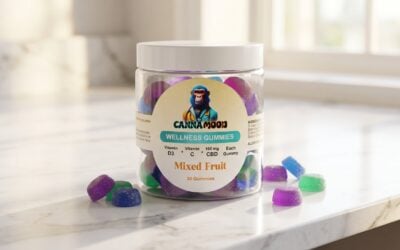
Find the best time to take CBD gummies for anxiety, how long they take to work, and how to dial in your dosage. A practical guide from Your Effects.