-
No products in the cart.



Do THC Gummies Show Up on a Drug Test? Straight Answer
Do THC gummies show up on a drug test? Learn what urine screening targets, the cutoff levels that decide your result, and where the real risk actually sits.
TLDR: The number on a CBD roll-on describes what went into the bottle, not what reaches your muscle. A 2000mg bottle holds twice the concentration of a 1000mg bottle of the same size, and that is all it promises. Formulation, application area and contact time decide the rest.
What 2000mg on a CBD roll-on means: it is the total cannabidiol in the whole container. Divide by the bottle volume to get the strength per millilitre, then look at the Certificate of Analysis to confirm the number is real. No topical label tells you how much reaches tissue under the skin.
You are standing in front of two bottles again. One says 1000mg. One says 2000mg. The second costs more and feels like the serious choice, so you reach for it. Before you do, you deserve to know what that number does and does not buy you.
I read the peer-reviewed literature on topical cannabinoids looking for one specific answer: how much CBD from a retail roll-on reaches muscle or joint tissue. Not one study measured it. Researchers have measured what sits in the skin layers, and that is a very different thing from what you are picturing.
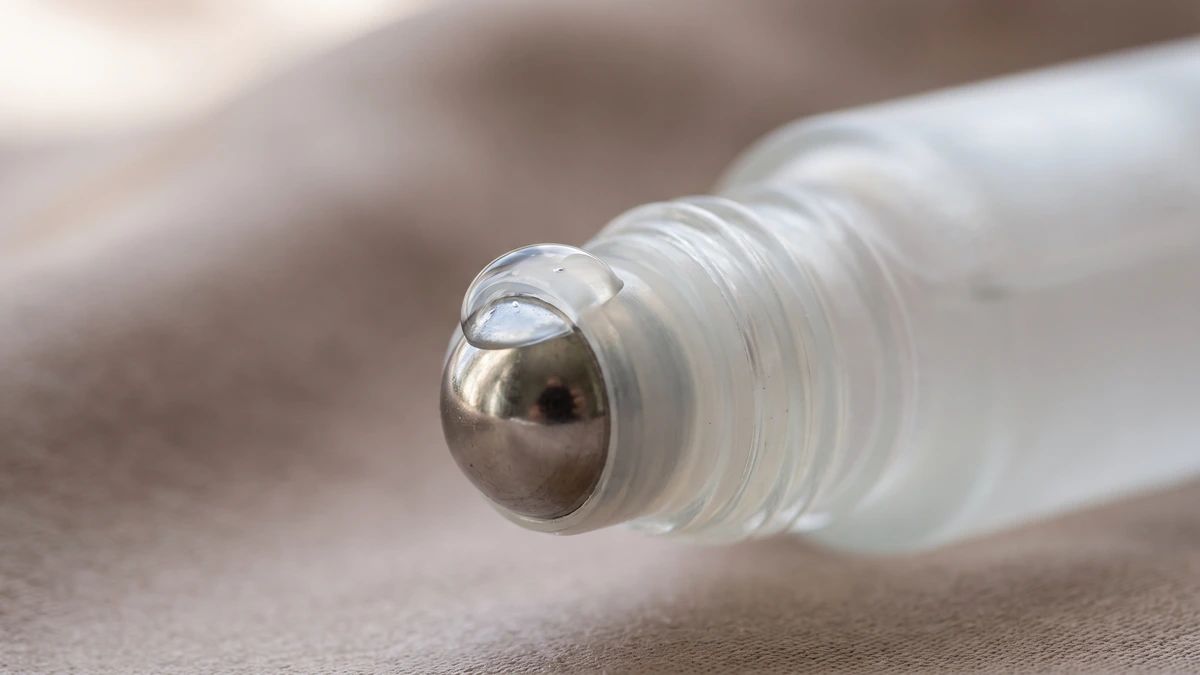
It is inventory. The figure counts the total cannabidiol the manufacturer put in the container, before you apply a single drop. Two bottles of identical size, one at 1000mg and one at 2000mg, differ by concentration, so an equal squeeze from the stronger bottle puts roughly twice the cannabidiol on your skin.
That is a real difference and it is worth paying attention to. What it is not is proof of twice the effect. Your skin is a barrier built to keep things out, and how much crosses depends on the formula, not the headline number.
Do the same division you would do on a gummy. Total milligrams divided by bottle millilitres gives you strength per millilitre. Then ask the only follow-up question that matters, which is whether an independent laboratory confirmed that figure for your batch.
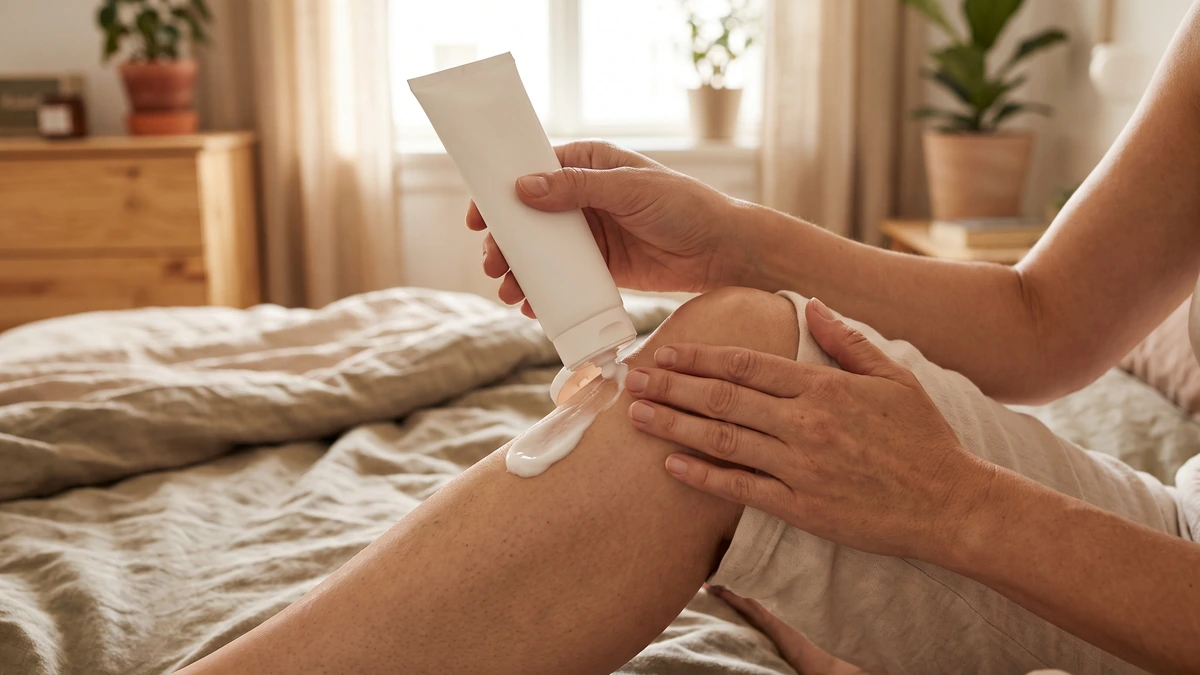
These two words get used interchangeably in marketing and they should not be. A topical is built to stay local, depositing cannabinoids in and near the skin where you rubbed it. A transdermal system is engineered to push compounds through the skin and into your bloodstream.
Almost every roll-on, lotion and balm you buy is the first kind. That is by design, and for most people it is the point. You want the product on the shoulder you slept badly on, not circulating through your whole body.
Formulation beats raw strength here, and the research should change what you look for. In a 2024 study using human abdominal skin, a colloidal gel carrying just 1 percent CBD achieved the highest delivery efficiency at 5.25 percent, outperforming a 6.6 percent oil solution and two marketed products. The weaker formula delivered more.
Read that again before you buy on milligrams alone. Your delivery system matters more than your headline concentration, which is exactly the opposite of how these products are sold to you.

The honest summary is that the evidence is early and mixed, and you should be suspicious of anyone who tells you otherwise. Two well-run trials point in opposite directions, and the difference between them is instructive for how you shop.
On the side that favours your purchase, a randomized double-blind crossover trial enrolled 18 participants with thumb basal joint arthritis. They applied 1mL of a 6.2mg/mL CBD preparation twice daily for two weeks, and reported improvements in pain and disability compared with the vehicle alone. Grip strength and range of motion did not change.
On the other side, a double-blind randomized trial of 21 college-aged participants applied topical CBD after biceps exercise to test delayed onset muscle soreness. It found no significant difference in soreness, arm circumference or contraction strength. Your gym soreness and your arthritic thumb are not the same target.
Notice how small both studies are before you treat either as settled. Eighteen people and 21 people are useful signals, not settled science. Many users report relief from topicals as part of a daily wellness routine, and that experience is worth something, but it is not the same as proof.
This is the question that keeps you from trying topicals at all, and the available evidence is reassuring for conventional products. In a controlled experiment, participants repeatedly applied THC-containing salves over several days. Every blood and urine sample came back negative for THC and its metabolites by GC-MS.
Low risk is not zero risk, and you should know where the exceptions live. Engineered transdermal systems are a different product class and do reach the bloodstream. Broken skin, very large application areas and mislabeled products all move the odds.
If your job tests you, that uncertainty is worth taking seriously. Read our full explainer on how THC milligrams are counted and pick products whose lab report you have actually opened.
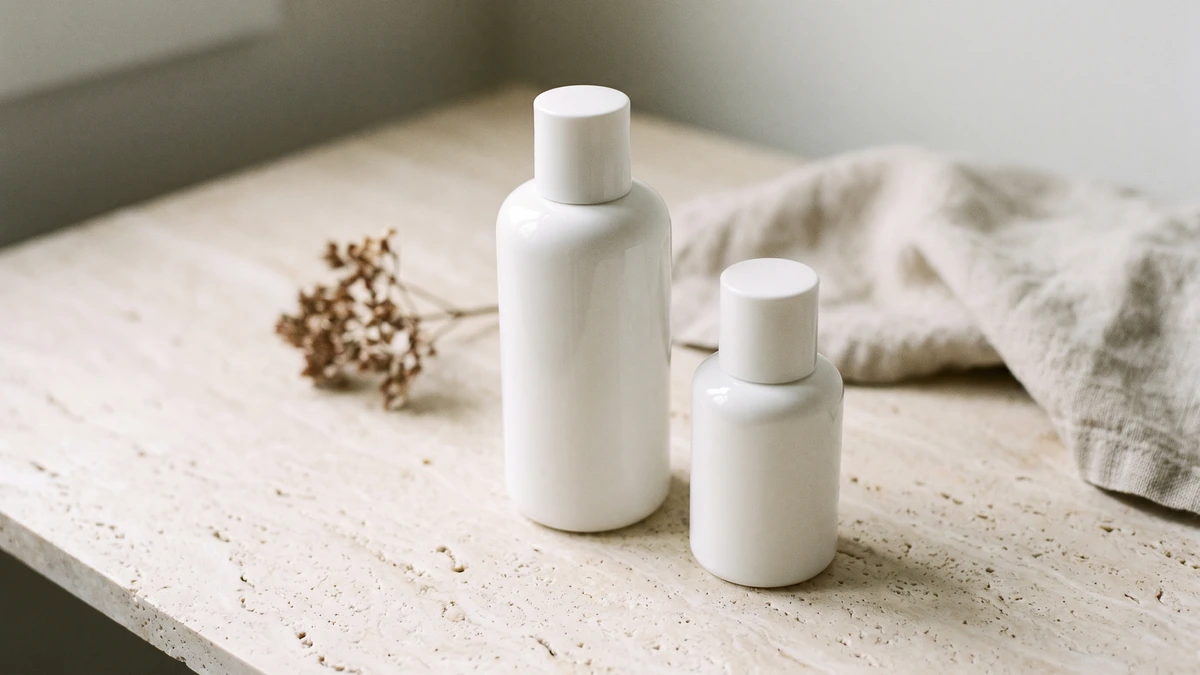
Label accuracy in this category is genuinely poor, and you need a defence. When researchers bought 105 hemp topicals from stores and online and tested them, of the 89 that listed a total CBD amount, only 24 percent were accurate within 10 percent of the label. THC turned up in 37 of the 105 products, and four of those were labeled THC free.
Run every bottle through these checks before it earns your money.
Your best defence is boring consistency. Use the same amount on the same spot for a week before you judge anything, because switching products every three days teaches you nothing about either one.
Canna Mood by Your Effects built its topical line for people who want the milligrams stated plainly. The Joint and Muscle Therapy CBD Roll-On carries 2000MG of CBD in an applicator built for targeted use on knees, shoulders and the backs of hands.
If you prefer a lotion, the line splits by time of day. The Nighttime Full Spectrum CBD and THC Pain Relief Lotion at 2000MG is the heavier option, and the Daytime version at 1000MG is the lighter one. For a ratio-based format, the 1oz 3:1 Topical Balm carries 270MG CBD and 90MG THC. Every batch is third-party lab tested with the Certificate of Analysis posted on the product page.
My take: I would rather hand you a well-formulated 1000MG lotion with a current lab report than a 2000MG bottle with a generic PDF. After reading the delivery research, the formula is the part I would pay extra for, and the milligram count is the part I would verify.
In the same bottle size, yes, it is twice the concentration, so an equal amount applied puts roughly twice the CBD on your skin. It does not follow that twice as much reaches tissue underneath. Delivery depends on the formulation, the area covered and how long the product stays in contact with your skin.
No published study has measured how much CBD from a retail roll-on reaches your muscle or joint tissue. Research has measured deposition within skin layers, where a 1 percent colloidal gel reached a delivery efficiency of 5.25 percent. Treat any specific claim about muscle penetration as unsupported.
In a controlled study of repeated topical application of THC-containing products, all blood and urine samples were negative by GC-MS. Your risk appears low for conventional topicals with verified lab reports. Engineered transdermal patches, broken skin and mislabeled products are the exceptions worth knowing about.
The trials that reported benefit used twice-daily application over two weeks. Consistency over that kind of window tells you more than a single use does. Follow the instruction on your product and give it a full week before you judge it.
A topical is designed to deposit cannabinoids locally in and near your skin. A transdermal system is engineered to carry compounds through the skin into the bloodstream. Nearly every retail roll-on, lotion and balm is a topical, which is why systemic effects are not the goal.
Many users report combining a topical for one specific area with an ingestible format for their overall routine. Since a topical stays local, it is a different job from a gummy you swallow. Talk with a healthcare professional before adding any supplement to your routine, especially alongside prescription medication.
Stop paying for a headline number you cannot verify. Shop vitamin-enhanced CBD products and the Canna Mood topical line at youreffects.com, where every batch is lab tested and the Certificate of Analysis sits on the product page. Questions about strengths or application go to the Canna Mood FAQ page, info@youreffects.com, or 725.261.5609. Adults 21 and older only.
These statements have not been evaluated by the Food and Drug Administration. These products are not intended to diagnose, treat, cure, or prevent any disease. Hemp-derived products are for adults 21 and older. Check your local laws before purchasing.

Do THC gummies show up on a drug test? Learn what urine screening targets, the cutoff levels that decide your result, and where the real risk actually sits.
What does a 1:1 CBD to THC ratio mean? See what controlled trials found about CBD offsetting THC, and how to read a ratio label before you buy anything.
Choosing CBD pre-rolls for stress? See what the controlled research shows, why strain names mislead you, and the label checks that matter before you buy.
How many mg of CBD should you take? Compare milligrams per serving across gummies, tinctures and topicals, and see why a bigger bottle is not stronger.
Find the best time to take CBD gummies for anxiety, how long they take to work, and how to dial in your dosage. A practical guide from Your Effects.
Your edibles stopped working and you want to know why. Learn how THC tolerance builds through CB1 receptor changes, how long a t-break takes, and smart dosing tips.